What is sugarcane bagasse? Benefits of using sugarcane bagasse for food packaging

Introduction
As the world shifts toward more sustainable and eco-conscious packaging solutions, sugarcane bagasse is emerging as a top choice in the foodservice industry. Made from the fibrous residue of sugarcane, this biodegradable material offers a wide range of applications for food packaging, including plates, hinged boxes, bowls, and cutlery.
This article will explore how sugarcane bagasse is revolutionizing food packaging with its eco-friendly properties, cost-effectiveness, and durability. We’ll also showcase our range of sugarcane bagasse products that contribute to a cleaner, greener future.
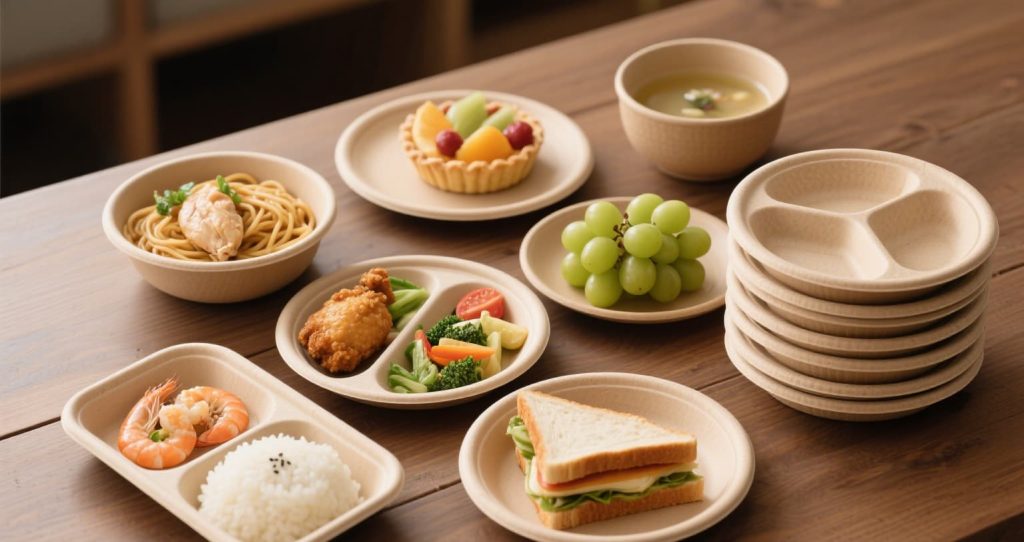
What is Sugarcane Bagasse?
Sugarcane bagasse is the fibrous material left after extracting juice from sugarcane. This byproduct has long been considered agricultural waste. However, over the years, it has gained recognition as a valuable, eco-friendly resource in the food packaging industry.
Global Production of Sugarcane:
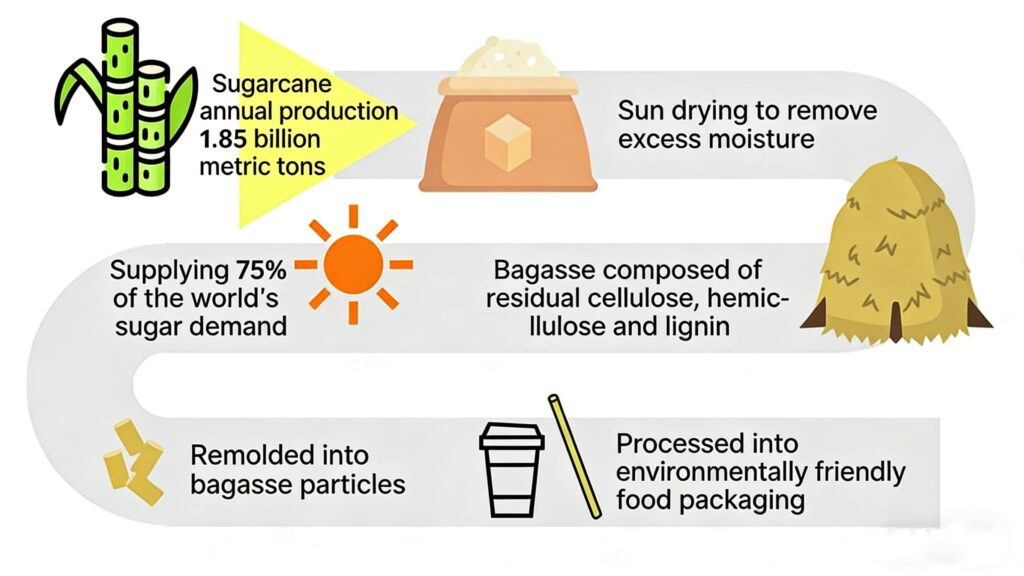
Sugarcane is one of the most widely cultivated crops in the world, with approximately 1.85 billion tons produced annually. Its rapid growth cycle—12 to 18 months—ensures a steady supply of bagasse, making it an ideal renewable resource.
Chemical-Free Source:
Unlike petroleum-based plastic packaging, which requires oil extraction and chemical refining, sugarcane bagasse is made from organic plant fibers that are naturally abundant and sustainable. As a result, it is biodegradable and compostable without harmful residues or pollutants.
Agricultural Waste Turned Resource:
Instead of being discarded, sugarcane bagasse can be repurposed as a sustainable alternative to plastic, reducing waste and promoting a circular economy. This transformation of waste into valuable packaging helps to address global sustainability challenges.
How is Sugarcane Bagasse Processed for Packaging?
The journey from sugarcane bagasse to food packaging products involves a series of steps aimed at maximizing the material’s potential:
Harvesting and Juice Extraction:
After sugarcane is harvested, the juice is extracted for sugar production. The leftover fibers are collected and dried.Drying and Pelletization:
The fibers, still containing about 50% moisture, are dried using natural sunlight or mechanical methods. Once dried, they are compressed into pellets or sheets, which are easy to mold and shape.Molding into Packaging Forms:
The pellets are then heated and pressed into specific shapes, such as plates, bowls, hinged boxes, and cutlery. The material is durable and naturally resistant to moisture, making it an ideal alternative to plastic.Minimal Chemical Use:
During processing, minimal chemicals are used, ensuring that the final product remains safe for food contact and free from harmful substances.
By using natural resources and low-impact processing, sugarcane bagasse offers a sustainable way to produce food packaging without relying on harmful plastics.
The Benefits of Sugarcane Bagasse for Food Packaging
Sugarcane bagasse offers a range of benefits that make it an ideal material for food packaging. Let’s explore these advantages in detail:
1. Biodegradable and Compostable
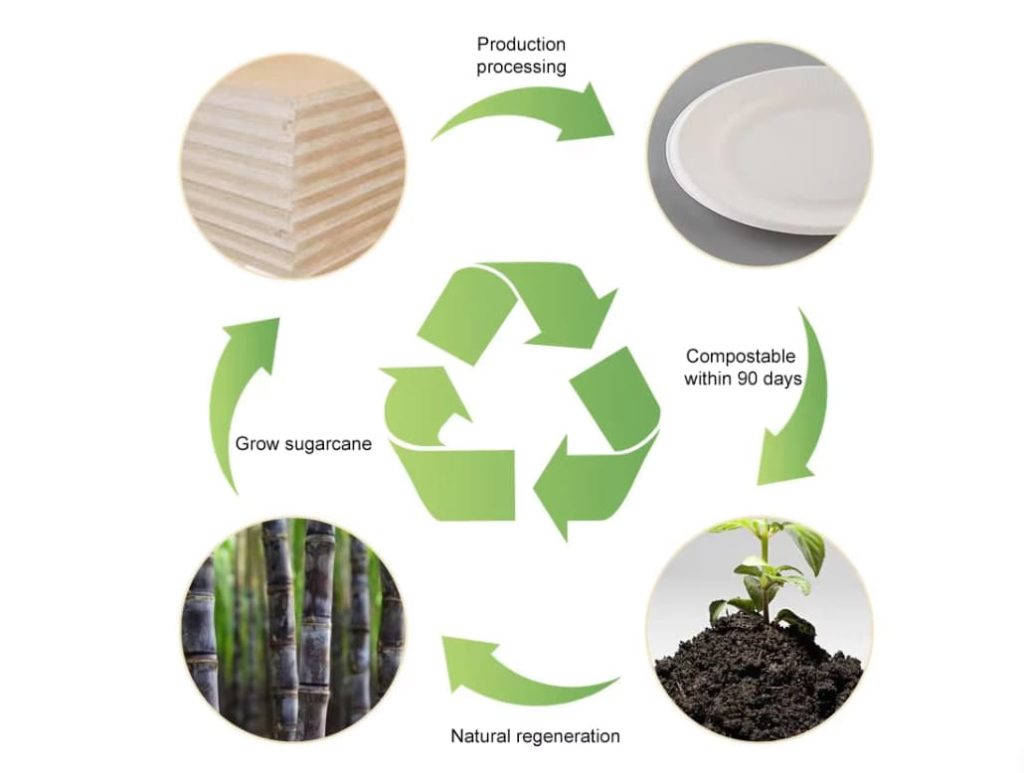
One of the primary benefits of sugarcane bagasse is its biodegradability. Unlike plastic, which can take hundreds of years to break down, bagasse naturally decomposes in months when exposed to the right conditions. This helps reduce landfill waste and pollution.
Home Compostable: Bagasse products can break down in your home compost bin, making it more accessible than other biodegradable materials like PLA, which require industrial composting conditions.
Return to Nature: Bagasse enriches the soil as it decomposes, contributing to the nutrient cycle and supporting healthy ecosystems.
2. Low Carbon Footprint
The production of sugarcane bagasse generates significantly fewer carbon emissions compared to petroleum-based plastics. By using agricultural waste, it avoids the extraction and refining processes that contribute to high emissions.
Carbon Neutrality: Growing sugarcane helps absorb carbon dioxide from the atmosphere, contributing to a carbon-neutral cycle. The minimal energy required for processing bagasse ensures its sustainability as a packaging material.
3. Cost-Effective
Although sugarcane bagasse packaging may initially cost more than traditional plastics, it offers long-term savings. The availability of sugarcane as a renewable resource makes bagasse more affordable than materials dependent on fossil fuels, which face price volatility due to supply and demand fluctuations.
Stable Supply: Sugarcane is widely grown across tropical regions, and its residue (bagasse) is available in large quantities. This consistency ensures affordable, reliable pricing.
4. Water and Oil Resistant
Sugarcane bagasse is naturally resistant to water and oil. This feature makes it highly suitable for food packaging, particularly for wet or oily items like soups, sauces, salads, and take-out meals.
No Plastic Coating: Unlike paper packaging, which often requires plastic coatings to achieve water resistance, sugarcane bagasse products do not need additional chemical treatments.
5. Versatile Applications
Sugarcane bagasse is incredibly versatile. It can be molded into various shapes and sizes, making it an ideal material for a wide range of food packaging products:
Plates, Bowls, Hinged Boxes, and Cutlery can all be produced from sugarcane bagasse, reducing the need for multiple types of packaging material.
6. Supports Circular Economy
Sugarcane bagasse is a prime example of how we can move towards a circular economy. By repurposing agricultural waste into valuable products, it minimizes waste and creates a closed-loop system in which resources are continually reused.
Compostable and Renewable: The natural fibers in bagasse decompose and return valuable nutrients to the soil, ensuring that the material is never truly wasted.
Sugarcane Bagasse Products: Plates, Hinged Boxes, Bowls, and Cutlery
1. Sugarcane Bagasse Plates
Our sugarcane bagasse plates are sturdy and durable, capable of holding a wide range of food types, from hot meals to cold salads. The water and oil-resistant properties make these plates ideal for foodservice applications.
Compostable: After use, these plates can be composted in both industrial and home settings, helping reduce the environmental impact of food packaging.
No Additional Coatings: Unlike paper plates, which often require plastic coatings to hold liquids, sugarcane bagasse plates are naturally resistant to moisture.
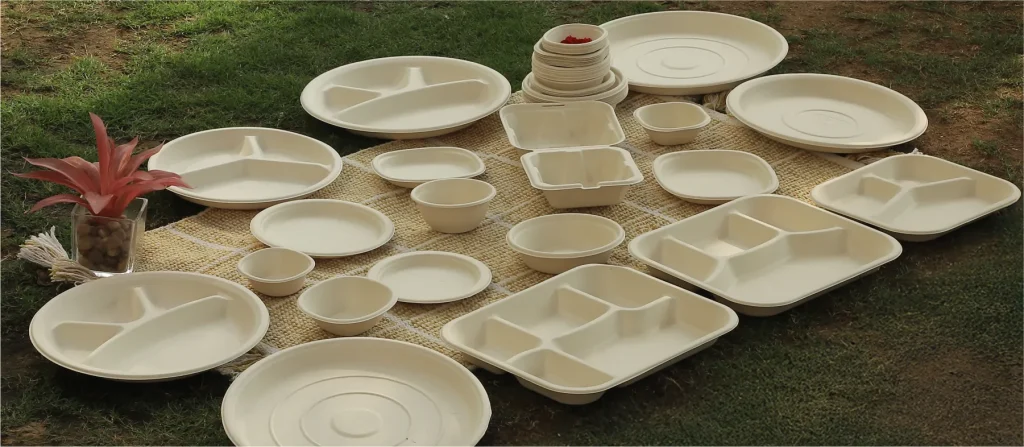
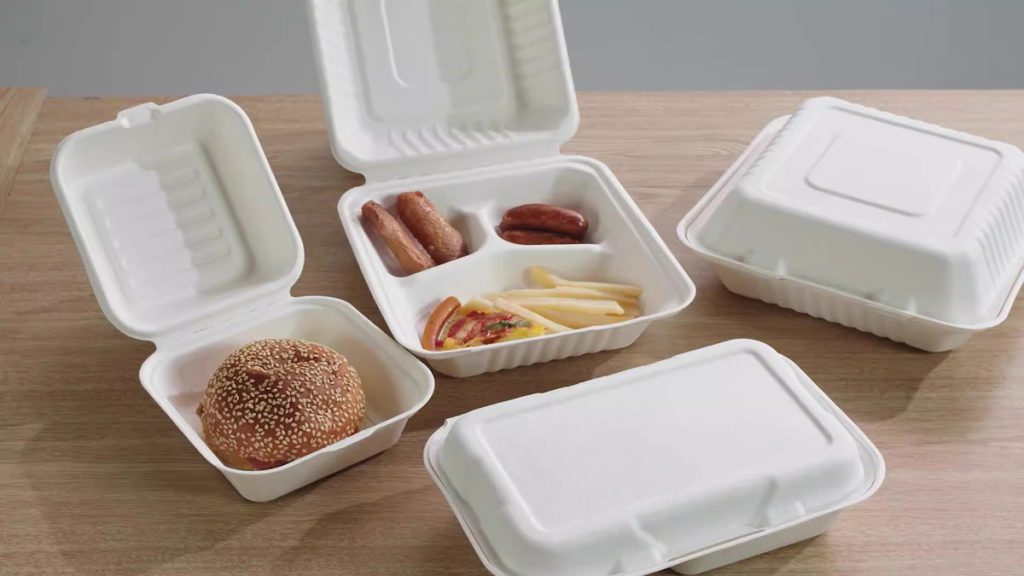
2. Sugarcane Bagasse Hinged Boxes
These hinged boxes are perfect for take-out meals, offering a secure, leak-proof design that keeps food fresh and safe during transport. Whether you’re serving hot meals, salads, or snacks, our bagasse hinged boxes ensure that your food stays intact.
Leak-Resistant: Thanks to the inherent strength of bagasse, these boxes can hold wet or oily food without leaking, making them a reliable option for takeout.
3. Sugarcane Bagasse Bowls
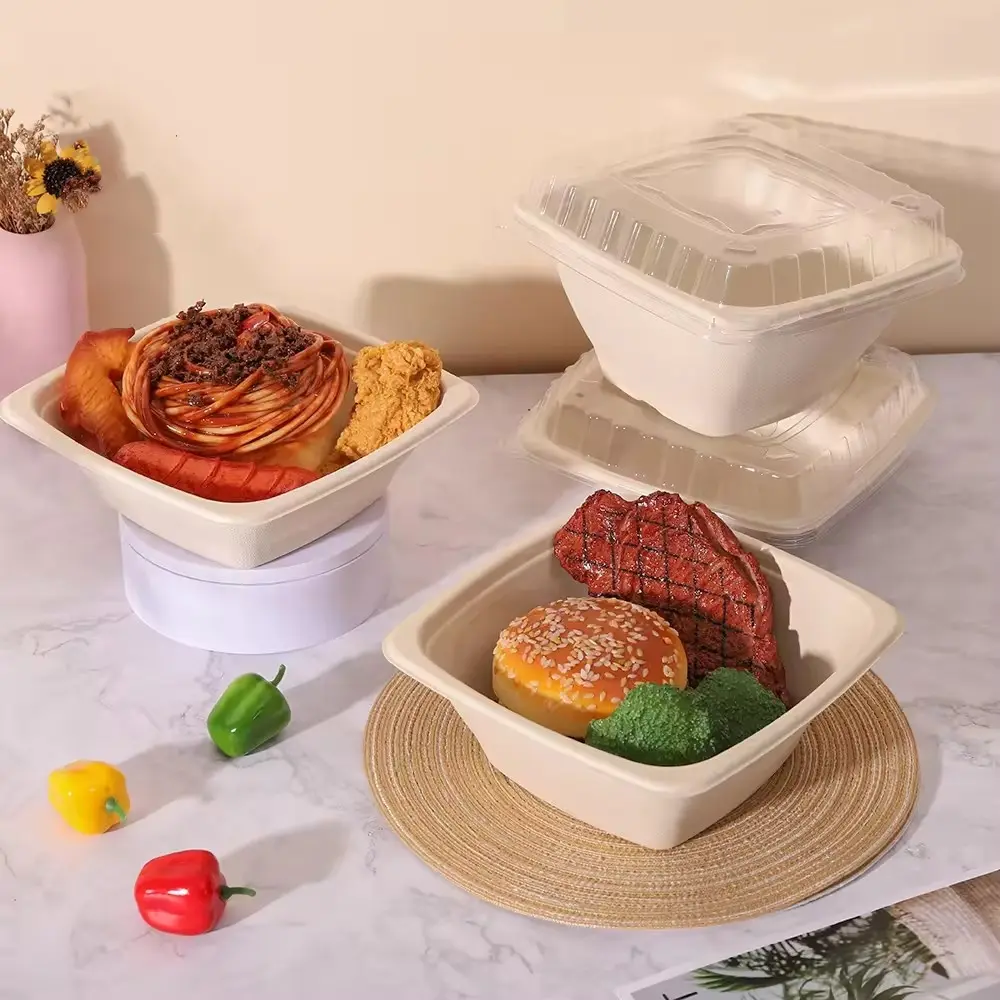
Sugarcane bagasse bowls are perfect for soups, stews, salads, and other wet foods. Their natural strength ensures that they won’t collapse under the weight of heavy or liquid-filled dishes.
Biodegradable: Like all our bagasse products, these bowls break down naturally, offering a sustainable alternative to plastic or Styrofoam containers.
4. Sugarcane Bagasse Cutlery
Our bagasse cutlery is an eco-friendly alternative to plastic utensils. Whether you need forks, knives, or spoons, these durable, biodegradable utensils are perfect for foodservice, catering, and takeout.
Compostable: After use, these cutlery items can be composted, reducing plastic waste and helping to promote sustainable consumption.
Environmental Impact: Sugarcane Bagasse vs. Paper and Plastic
Sugarcane Bagasse vs. Paper
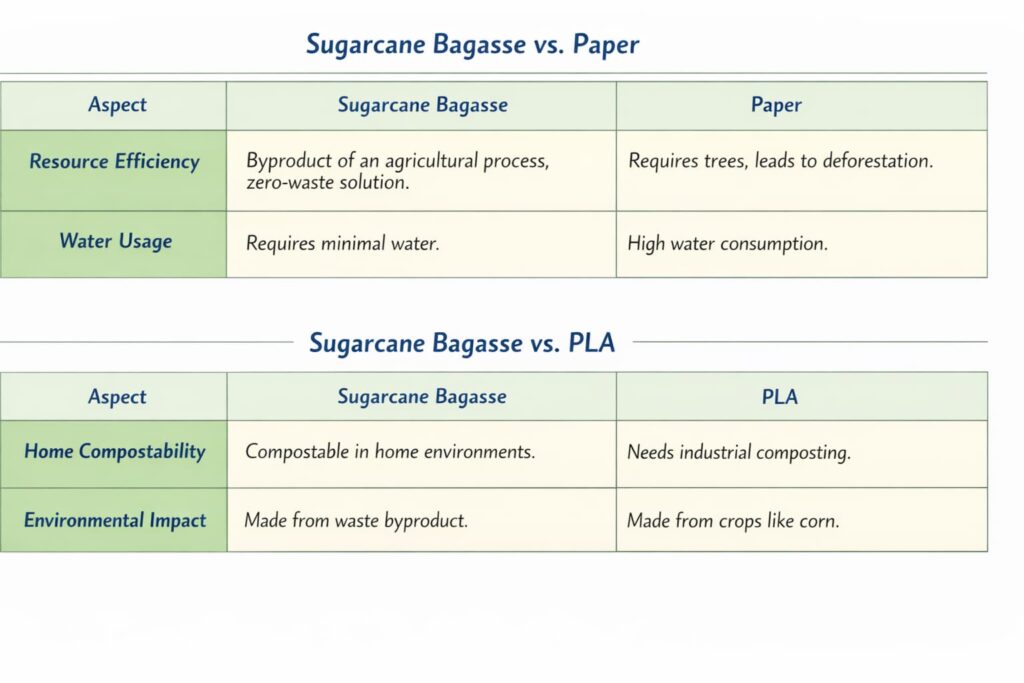
Resource Efficiency: Paper requires trees, which take years to grow, while sugarcane bagasse is a byproduct of an already existing agricultural process, offering a zero-waste solution.
Water Usage: Paper manufacturing consumes a significant amount of water. In contrast, sugarcane bagasse production requires much less water, making it a more efficient material overall.
Sugarcane Bagasse vs. PLA
Home Compostability: Unlike PLA (which requires industrial composting conditions), sugarcane bagasse can be composted in a typical home composting environment, making it more accessible for consumers.
Environmental Impact: While PLA is made from agricultural products like corn, sugarcane bagasse provides a more sustainable solution, utilizing an existing waste product rather than requiring additional agricultural land.
Conclusion
In the face of growing environmental concerns, sugarcane bagasse has emerged as a leading alternative to traditional food packaging materials like plastic and paper. Offering a host of benefits—from biodegradability and cost-effectiveness to versatility and zero waste—sugarcane bagasse represents a sustainable solution for foodservice packaging. With plates, hinged boxes, bowls, and cutlery available in sugarcane bagasse, businesses can contribute to reducing plastic waste while offering safe, functional, and eco-friendly packaging options.
By choosing sugarcane bagasse, companies can significantly enhance their sustainability credentials, reduce their carbon footprint, and help shape a greener, more sustainable future.
FAQ
Q1: Can sugarcane bagasse plates hold hot food?
Yes, sugarcane bagasse plates are heat-resistant and can safely hold hot food items like soups, pasta, and stews.
Q2: Are sugarcane bagasse hinged boxes leakproof?
Yes, our sugarcane bagasse hinged boxes are designed to be leak-resistant, making them perfect for moist or oily foods.
Q3: Are sugarcane bagasse products safe for food?
Yes, sugarcane bagasse products are food-safe, containing no harmful chemicals or additives.
Q4: Can sugarcane bagasse cutlery be reused?
While our bagasse cutlery is durable, it is designed for single-use, making it ideal for takeout and other short-term applications. It is also fully biodegradable.
Q5: How long does it take for sugarcane bagasse to decompose?
Sugarcane bagasse typically decomposes within 3 to 6 months in a composting environment, much faster than plastic.
References
Muthu, S. S. (2017). Sustainable Materials and Green Packaging: Biodegradable, Recyclable, and Eco-friendly Alternatives. Springer.
Ragaert, K., et al. (2017). Biodegradable Plastics and Plastics Recycling. Elsevier.
FAO (2021). Sugarcane Production and its Role in Sustainable Agriculture. FAO.
Kumar, R., & Gupta, S. (2019). Environmental Performance of Bagasse-based Packaging Materials. Environmental Science and Pollution Research.


评论
发表评论