The Drawbacks of Using Corn Starch Packaging

Introduction
As the world shifts towards more sustainable solutions, packaging materials made from renewable resources have garnered significant attention. Among these, corn starch packaging has been hailed as an eco-friendly alternative to traditional plastic. Derived from a renewable plant-based resource, corn starch packaging is often marketed as a biodegradable and compostable material. While it holds significant potential in reducing plastic waste, there are several drawbacks associated with its use. This article will delve into the main disadvantages of corn starch packaging, exploring the issues of moisture sensitivity, durability, cost of production, environmental impact when not disposed of correctly, limited shelf life, and compatibility with existing recycling infrastructure. We will also explore data, case studies, and comparative analysis to offer a thorough understanding of why this material, while promising, has its limitations.
1. Moisture Sensitivity
Corn starch packaging is highly sensitive to moisture, which is one of its biggest drawbacks. This material performs poorly when exposed to water or high humidity. Unlike conventional plastic materials such as PET (Polyethylene Terephthalate) or PP (Polypropylene), which maintain their structural integrity in wet conditions, corn starch packaging can absorb moisture, weakening its structure and causing it to degrade. This makes it unsuitable for packaging products with high moisture content, such as soups, beverages, or high-moisture foods like fresh fruits and salads.
Case Study: Moisture Sensitivity in Food Packaging
A study conducted by the University of California’s Department of Environmental Science found that corn starch-based materials began to break down within 24 hours of exposure to moisture, while materials like PET and PLA retained their structural integrity for days. This issue of moisture sensitivity means that corn starch packaging is not ideal for applications requiring long-lasting moisture protection, such as liquid food containers.
Data Table: Moisture Sensitivity of Various Packaging Materials
| Packaging Material | Moisture Sensitivity | Best Applications |
|---|---|---|
| Corn Starch Packaging | High | Dry foods, packaging for non-liquid items |
| PLA (Polylactic Acid) | Moderate | Cold beverages, dry foods, refrigerated items |
| PP (Polypropylene) | Low | Hot foods, beverages, high-moisture products |
| PET (Polyethylene Terephthalate) | Low | High-moisture foods, long shelf-life packaging |
2. Limited Durability and Strength
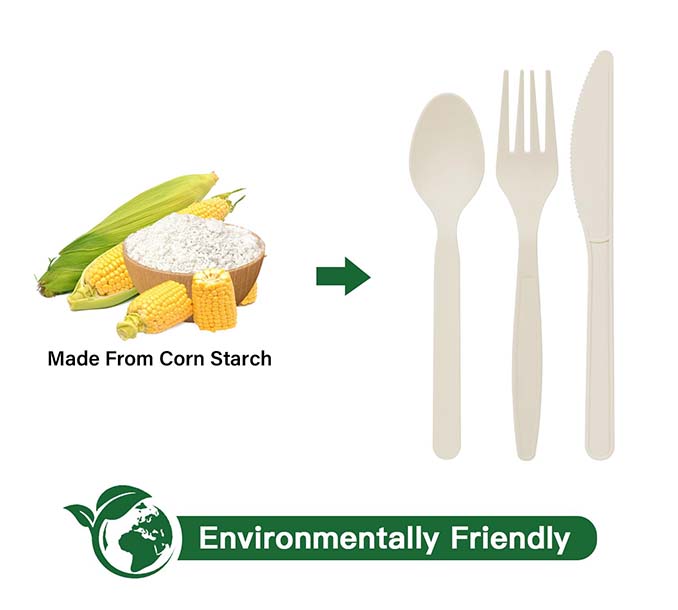
Corn starch packaging lacks the durability and strength of materials like PET, PLA, or PP, which makes it unsuitable for heavy-duty applications. Corn starch-based materials are less impact-resistant, meaning they are more prone to cracking or breaking under pressure. This limited strength makes corn starch packaging unsuitable for items that need to maintain their structure under stress or need to be transported over long distances.
Impact on the Food Service Industry
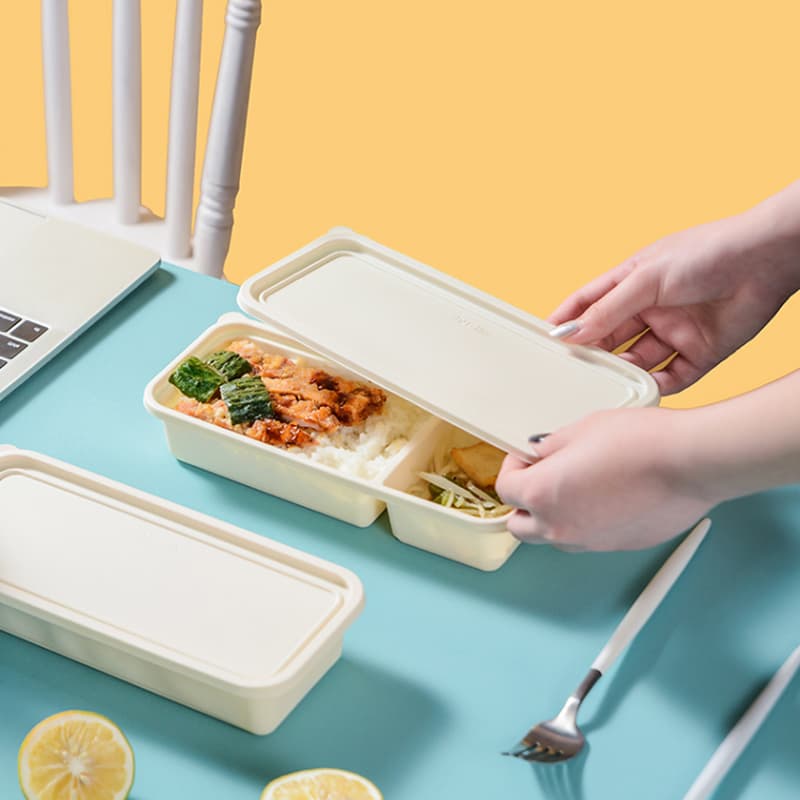
In the foodservice industry, packaging materials often need to withstand stacking, handling, and exposure to varying temperatures. Corn starch packaging can degrade and lose its integrity when subjected to these conditions. For instance, takeout containers made from corn starch-based materials may deform after holding a hot meal for even a short period. This lack of durability makes it less suitable for packaging foods that need to be transported, stored, or stacked under high pressure.
Case Study: Durability Issues in Food Packaging
A comparison of packaging materials used in the takeout food industry revealed that corn starch containers deformed or cracked after 30 minutes of holding a hot meal. In contrast, PP and PET containers exhibited no significant damage, maintaining their structural integrity for hours. This lack of durability is one of the reasons why many fast food chains and restaurants continue to rely on traditional plastic materials for their packaging needs.
Data Table: Durability Comparison of Packaging Materials
| Packaging Material | Durability | Impact Resistance | Suitable Applications |
|---|---|---|---|
| Corn Starch Packaging | Low | Low | Dry food items, lightweight products |
| PLA | Moderate | Moderate | Cold beverages, salads, refrigerated food |
| PP | High | High | Hot foods, liquids, heavy-duty applications |
| PET | High | High | Liquids, high-moisture foods, long shelf-life packaging |

3. High Cost of Production
While corn starch packaging is biodegradable and compostable, its production costs are relatively high compared to conventional plastic materials. The process of extracting and refining corn starch, followed by turning it into packaging material, involves several complex steps. This can make the production of corn starch packaging more expensive, which is often passed down to consumers in the form of higher product prices.
Comparing Production Costs: Corn Starch vs. Traditional Plastics
The production cost of corn starch packaging is typically 20-30% higher than that of traditional plastics like PET or PP. This price discrepancy can be a significant hurdle for businesses that rely on low-cost packaging solutions, particularly in industries such as foodservice and retail, where packaging costs can make up a large portion of the overall expense.
Example:
In the foodservice industry, where cost-efficiency is a key factor, businesses may opt for cheaper plastic alternatives that offer lower production costs. Despite the growing demand for eco-friendly packaging solutions, the higher price point of corn starch packaging may limit its adoption in high-volume, price-sensitive sectors.
Data Table: Production Cost Comparison
| Material | Production Cost | Suitability for Mass Production |
|---|---|---|
| Corn Starch Packaging | High | Not suitable for low-margin mass production |
| PLA (Polylactic Acid) | Moderate | Suitable for mid-range and premium products |
| PP (Polypropylene) | Low | Ideal for mass-market, high-volume production |
| PET (Polyethylene Terephthalate) | Low | Common for cost-efficient large-scale production |
4. Environmental Impact When Not Properly Disposed Of
Despite being marketed as biodegradable, corn starch packaging can still contribute to environmental problems if it is not disposed of correctly. Industrial composting facilities are required to break down corn starch materials within a reasonable time frame. If these packaging materials are thrown into landfills, they can take years to decompose, potentially offsetting the environmental benefits.
Challenges in Waste Management and Disposal
In many regions, proper composting facilities for biodegradable packaging are not readily available. Corn starch packaging may end up being improperly disposed of, causing it to remain in landfills for an extended period. Furthermore, in areas without appropriate waste management infrastructure, it could be incinerated, releasing harmful gases into the atmosphere.
Data Table: Composting vs. Landfilling
| Disposal Method | Degradation Time | Environmental Impact |
|---|---|---|
| Industrial Composting | 3-6 months | Low environmental impact (if properly managed) |
| Landfill Disposal | 1-5 years | Medium to high environmental impact |
| Incineration | N/A | High environmental impact (air pollution) |
5. Limited Shelf Life
Corn starch packaging has a relatively short shelf life, especially when compared to more durable materials like PET or PLA. As a biodegradable material, it begins to degrade over time, particularly when exposed to fluctuating temperatures and humidity. This makes it unsuitable for long-term storage of perishable goods or products that require an extended shelf life.
Case Study: Shelf Life of Corn Starch Packaging
A study by the International Packaging Institute found that corn starch packaging for food products began to degrade after only six months of storage under non-ideal conditions (e.g., fluctuating temperature and humidity). On the other hand, PET and PP containers maintained their structural integrity for up to two years under similar conditions.
6. Compatibility with Existing Recycling Systems
Most recycling systems are not designed to handle biodegradable packaging materials like corn starch packaging. While it is compostable, it does not fit into the standard recycling streams used for plastic, glass, and metal. In many areas, this incompatibility leads to corn starch packaging being thrown out with regular waste, undermining its environmental advantages.
Industry Efforts to Improve Recycling Compatibility
Some regions are beginning to develop dedicated waste streams for biodegradable packaging, but such systems remain limited. Without proper recycling infrastructure, corn starch packaging may contribute to waste rather than alleviate it.
FAQ Section
1. Is corn starch packaging waterproof?
No, corn starch packaging is highly sensitive to moisture and loses its structural integrity when exposed to liquids or high humidity.
2. Can corn starch packaging hold hot food?
Corn starch packaging is not ideal for hot foods due to its low heat resistance. It may degrade when exposed to high temperatures for extended periods.
3. How long does it take for corn starch packaging to degrade?
In composting conditions, corn starch packaging typically degrades within 3-6 months. However, in landfills, the degradation process can take up to 1-5 years.
4. Is corn starch packaging recyclable?
No, corn starch packaging is not recyclable in traditional recycling streams. It is compostable but requires industrial composting facilities to degrade properly.
5. Does corn starch packaging have any environmental impact?
While corn starch packaging is biodegradable, its production and improper disposal can still contribute to environmental problems if not handled correctly.
6. What types of food can be packaged with corn starch materials?
Corn starch packaging is best suited for dry foods like snacks, dry cereals, and confectionery. It is not suitable for wet or liquid-based products.
7. How does corn starch packaging compare to other biodegradable materials like PLA?
While both corn starch and PLA are biodegradable, PLA offers better moisture resistance and strength, making it more suitable for a wider range of applications.
Conclusion
Corn starch packaging represents a promising alternative to traditional plastic materials in the pursuit of sustainable packaging solutions. However, its moisture sensitivity, limited durability, high production costs, potential environmental impact when not disposed of correctly, limited shelf life, and compatibility issues with recycling systems make it less suitable for certain applications. While it works well for dry, non-liquid food products, its performance falls short for high-moisture or long shelf-life products. Further research and development in alternative biodegradable materials, along with improvements in waste management infrastructure, may help address some of these challenges in the future.
References
Global Data: Bioplastics Market Analysis 2021
Corn Starch Packaging Overview
PLA vs Corn Starch Packaging
Compostability of Corn Starch Materials
Challenges in Corn Starch Packaging for Food
Copyright Statement
© 2026 Dashan Packing. All rights reserved.
This article is an original work created by the Dashan Packing editorial team.
All text, data, and images are the result of our independent research, industry experience,
and product development insights. Reproduction or redistribution of any part of this content
without written permission is strictly prohibited.
Dashan Packing is committed to providing accurate, evidence-based information and
to upholding transparency, originality, and compliance with global intellectual property standards.


评论
发表评论