The Environmental Benefits of Using Corn Starch in Packaging: A Sustainable Solution for the Future

Introduction
The environmental impact of plastic waste has become one of the most pressing concerns of our time. From oceans and rivers to landfills and forests, plastic pollution has reached catastrophic levels, with plastic waste often taking hundreds of years to break down. As a result, governments, businesses, and consumers are increasingly seeking alternative packaging solutions that can help address this issue.
One promising solution is corn starch-based packaging—a biodegradable, compostable, and renewable material that offers a more sustainable alternative to conventional plastic packaging. This article explores the environmental benefits of using corn starch in packaging, examining its role in reducing plastic waste, lowering carbon emissions, and promoting a more circular economy.
1. The Growing Need for Eco-Friendly Packaging Solutions
Plastic Pollution Crisis
The world is facing a plastic pollution crisis. According to the United Nations Environment Programme (UNEP), around 8 million tons of plastic enter the oceans every year. Single-use plastic packaging, such as bottles, bags, and wrappers, constitutes a significant portion of this waste. The long-lasting nature of plastic, coupled with its widespread use, means that it often ends up in landfills, rivers, and oceans, where it takes hundreds of years to degrade, contributing to pollution and harming wildlife.
Regulatory Pressure
In response to the growing environmental crisis, governments worldwide are introducing regulations to limit the use of single-use plastics. For instance, the European Union has implemented a ban on various single-use plastic items, including straws, plastic plates, and cutlery. Other regions, including parts of the U.S., Canada, and India, have also begun to pass legislation aimed at reducing plastic waste. These regulatory efforts are helping to create a market for more sustainable, biodegradable packaging options.
Shift to Sustainable Packaging
As consumers and companies become more environmentally conscious, there is an increasing demand for sustainable packaging materials. One such material is corn starch, which is derived from a renewable resource (corn) and can be composted or biodegraded, offering a solution to the growing need for eco-friendly packaging alternatives.
2. Corn Starch: A Renewable and Biodegradable Material
What is Corn Starch?
Corn starch is a carbohydrate extracted from the endosperm of corn kernels. It is a natural polymer that, when processed, can be used to create packaging materials. Corn starch is renewable, biodegradable, and compostable, which makes it an attractive alternative to petroleum-based plastics that contribute to environmental harm.
Biodegradability
One of the main environmental benefits of corn starch packaging is its biodegradability. Unlike plastic, which can take centuries to decompose, corn starch products break down quickly in composting environments, typically within a few months. When disposed of in the right conditions, corn starch packaging will degrade into non-toxic components, avoiding the long-lasting pollution associated with plastics.
Composting Benefits
In addition to biodegradability, corn starch packaging is compostable. This means it can be processed into nutrient-rich compost, which can be used to enrich soil. In contrast, plastic waste often accumulates in landfills for hundreds of years, leaching harmful chemicals into the ground. Composting corn starch packaging helps reduce waste and contributes to a circular economy by returning valuable nutrients to the soil.
3. Environmental Benefits of Corn Starch Packaging
Reduction of Plastic Waste
The adoption of corn starch-based packaging has the potential to significantly reduce plastic waste. A study by the Plastic Oceans Foundation estimates that over 300 million tons of plastic are produced each year, a large portion of which is used for packaging. By switching to biodegradable alternatives like corn starch, we can help reduce plastic pollution in the environment and shift towards more sustainable packaging solutions.
Lower Carbon Footprint
Corn starch packaging generally has a lower carbon footprint compared to plastic. Producing corn starch-based products requires fewer fossil fuels and emits less CO2 compared to the production of plastic, which relies on petroleum. Research from Cornell University shows that corn starch packaging can reduce CO2 emissions by up to 40% when compared to traditional plastic.
Table 1: Corn Starch Packaging vs Traditional Plastic Packaging: Environmental Impact Comparison
| Parameter | Corn Starch Packaging | Traditional Plastic Packaging |
|---|---|---|
| Material Source | Renewable (Corn) | Petroleum-Based |
| Carbon Footprint | Lower (CO₂ reduction of 40%) | High |
| Degradation Time | 3-6 months | 100-1000 years |
| Biodegradability | Yes | No |
| Compostability | Yes | No |
| Environmental Impact | Low (Reduces Plastic Pollution) | High (Persistent Pollution) |
Waste Reduction and Circular Economy
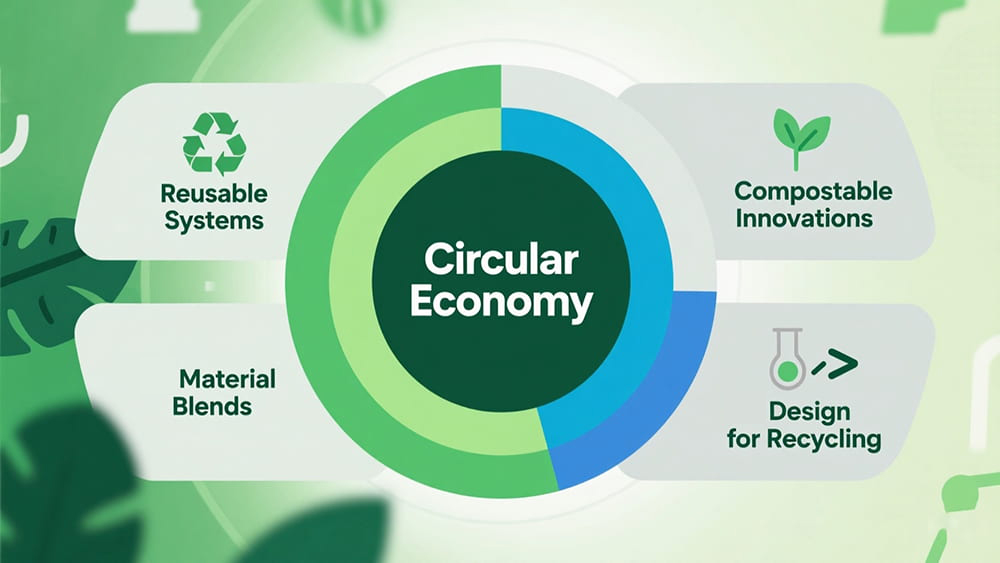
Corn starch packaging supports the concept of a circular economy, which focuses on reducing waste and reusing resources. Unlike plastic, which can take centuries to degrade, corn starch products can be composted or biodegraded in a matter of months. This reduces the burden on landfills and minimizes environmental harm.
Moreover, corn starch packaging reduces the need for virgin plastic production, which helps conserve natural resources such as petroleum and reduces the environmental damage caused by plastic production.
4. Corn Starch Packaging vs. Other Bioplastics
Comparison with PLA (Polylactic Acid)
Polylactic acid (PLA) is another popular bioplastic made from renewable resources like corn and sugarcane. While PLA is also biodegradable and compostable, it requires specific industrial composting conditions to degrade properly. Corn starch packaging, on the other hand, can break down under a wider range of conditions, making it a more versatile and easier-to-process material.
Additionally, corn starch packaging is often more cost-effective to produce compared to PLA, making it a better option for large-scale commercial production.
Table 2: Corn Starch Packaging vs Other Common Bioplastics
| Material | Source | Degradability | Production Cost | Applications |
|---|---|---|---|---|
| Corn Starch Packaging | Corn | Rapid Degradation (a few months) | Low | Food Packaging, Disposable Items |
| PLA | Corn, Sugarcane | Industrial Composting (Specific Conditions) | Medium | Food Packaging, Cups, Containers |
| PHA | Microbial Fermentation | Natural Degradation | High | Electronic Packaging, Medical Packaging |
Comparison with PHA (Polyhydroxyalkanoates)
PHA is a bioplastic produced by microorganisms that consume sugars and fats. While PHA is biodegradable, it is currently more expensive to produce than corn starch-based products. The cost of PHA limits its widespread adoption, whereas corn starch is readily available and easier to process at scale. This makes corn starch a more practical and cost-efficient choice for businesses looking to adopt sustainable packaging solutions.
5. Applications of Corn Starch Packaging
Food Packaging
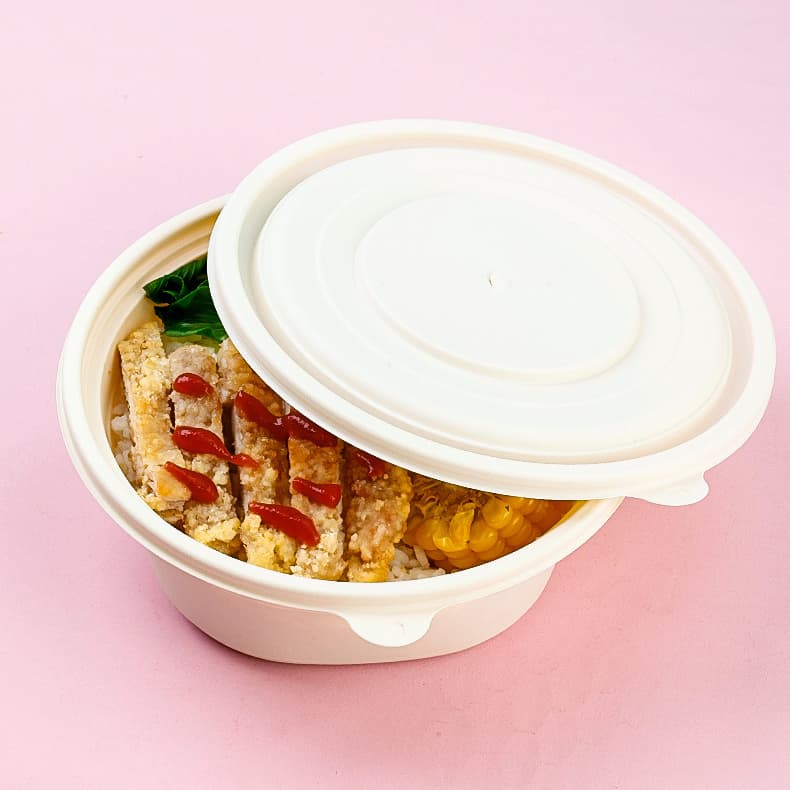
One of the most significant applications of corn starch packaging is in the food industry. Many restaurants and food manufacturers are turning to biodegradable packaging options, such as corn starch trays, containers, and bags, to reduce their environmental footprint. Corn starch packaging is ideal for take-out containers, which are commonly used in fast food and delivery services, as it provides a biodegradable alternative to plastic.
Non-Food Applications
Beyond the food industry, corn starch packaging is also used in other sectors, such as personal care products (e.g., shampoo bottles and packaging), pharmaceuticals, and electronics. Biodegradable packing peanuts made from corn starch are commonly used for shipping fragile items, offering a more environmentally friendly alternative to styrofoam.
Real-World Examples
Companies such as McDonald’s and Starbucks have begun experimenting with corn starch-based packaging, including compostable trays and takeout containers. Other companies, such as Nestlé and Coca-Cola, are exploring corn starch as an alternative to plastic for packaging their products.
6. The Environmental Challenges of Corn Starch Packaging
Land Use for Corn Cultivation
While corn starch is a renewable material, its production can have environmental drawbacks, particularly in terms of land use. Large-scale corn farming requires significant water, fertilizers, and pesticides. Additionally, the intensive use of land for corn cultivation can contribute to deforestation and soil erosion.
However, sustainable farming practices—such as crop rotation, organic farming, and reduced pesticide use—can help mitigate these negative environmental impacts and make the production of corn starch more sustainable.
Production Energy Use
The production of corn starch requires energy, although the energy consumption is still much lower than the energy needed to produce petroleum-based plastics. The overall environmental impact of corn starch packaging depends on the energy used in its production process, so improving production efficiency and using renewable energy sources can further reduce its carbon footprint.
7. The Future of Corn Starch Packaging
Technological Innovations
Advances in technology are improving the efficiency and performance of corn starch packaging. Researchers are working on methods to enhance the material’s properties, such as improving its water resistance and strength, which will increase its range of applications and make it more competitive with conventional plastics.
Table 3: Carbon Footprint of Corn Starch Packaging Lifecycle vs Traditional Plastics
| Material | Production CO₂ Emissions | Transportation CO₂ Emissions | Degradation CO₂ Emissions | Total CO₂ Emissions |
|---|---|---|---|---|
| Corn Starch Packaging | 0.5 kg CO₂/kg | 0.1 kg CO₂/kg | 0.1 kg CO₂/kg | 0.7 kg CO₂/kg |
| Traditional Plastic Packaging | 1.2 kg CO₂/kg | 0.3 kg CO₂/kg | 0 | 1.5 kg CO₂/kg |
Circular Economy Integration
The future of packaging will likely involve the widespread adoption of biodegradable materials, including corn starch. With improved composting infrastructure and greater consumer awareness, corn starch packaging could become a mainstream solution for reducing plastic waste.
Governments can play a key role in encouraging the use of sustainable packaging by providing incentives to manufacturers and implementing policies that promote biodegradable alternatives to plastics.
8. Conclusion
Corn starch-based packaging offers numerous environmental benefits, including reduced plastic waste, lower carbon emissions, and support for a circular economy. While challenges exist in terms of land use and production energy, the potential of corn starch packaging to reduce plastic pollution and promote sustainability makes it a promising alternative to conventional plastic materials.
As technology advances and the demand for eco-friendly packaging continues to rise, corn starch-based products are set to play an increasingly important role in the shift toward more sustainable packaging solutions.
FAQ Section
What is corn starch packaging?
Corn starch packaging is made from natural, biodegradable corn starch, offering a sustainable alternative to plastic packaging.
How long does corn starch packaging take to decompose?
Corn starch packaging can decompose in a few months under composting conditions, unlike plastic which can take centuries.
Is corn starch packaging completely eco-friendly?
While it is more sustainable than plastic, there are environmental concerns related to large-scale corn cultivation and production energy.
Can corn starch packaging be composted at home?
Yes, corn starch packaging can generally be composted at home if it is in a compostable environment.
What are the main uses of corn starch packaging?
It is primarily used for food packaging, take-out containers, and in industries like personal care, pharmaceuticals, and electronics.
Is corn starch packaging more expensive than plastic?
Initially, corn starch packaging can be more expensive, but as production scales up, it is becoming more cost-competitive with plastic.
What are the environmental impacts of growing corn for packaging?
Corn farming can have negative environmental impacts such as water consumption and pesticide use, which need to be managed for sustainable production.
References
Cornell University
Greenpeace – Bioplastics
Copyright Statement
© 2026 Dashan Packing. All rights reserved.
This article is an original work created by the Dashan Packing editorial team.
All text, data, and images are the result of our independent research, industry experience,
and product development insights. Reproduction or redistribution of any part of this content
without written permission is strictly prohibited.
Dashan Packing is committed to providing accurate, evidence-based information and
to upholding transparency, originality, and compliance with global intellectual property standards.


评论
发表评论