What Is Compostable Packaging Certification? (And How to Avoid Fake Eco-Labels)

Quick Answer: The Foundation of Eco-Compliance
Compostable packaging certification is a rigorous, legally recognized verification issued by independent third-party organizations (such as BPI in North America or TÜV Austria in Europe). It guarantees that a packaging product will completely break down into water, carbon dioxide, and nutrient-rich biomass within a specific timeframe (usually 90 to 180 days) under specific conditions, leaving zero toxic residue or microplastics behind. For B2B importers, buying certified packaging is no longer just a marketing choice; it is the only way to avoid heavy “greenwashing” fines and comply with strict international plastic bans.
 Ready to upgrade your supply chain with verified materials? [Check our certified compostable products here].
1. The Greenwashing Trap: Biodegradable vs. Compostable
One of the most dangerous and costly mistakes a packaging importer can make today is confusing “biodegradable” with “compostable.” While they sound similar to the average consumer, legally and scientifically, they are worlds apart.
Many dishonest suppliers will print a generic green leaf logo on a box and call it “biodegradable.” However, biodegradable is a marketing buzzword with no strict legal timeframe. A standard petroleum-based plastic cup will technically “biodegrade” over 500 to 1,000 years, breaking down into harmful microplastics that pollute the food chain.
Compostable, on the other hand, is a strict scientific standard with a ticking clock. Certified compostable packaging must degrade at a rate comparable to known compostable materials (like paper, leaves, or food waste). More importantly, the resulting compost must support plant growth and must not leave behind heavy metals or forever chemicals (PFAS).
To learn more about the strict chemical safety requirements in eco-packaging, read our deep-dive guide: [What Is PFAS-Free Food Packaging and Why It Matters].
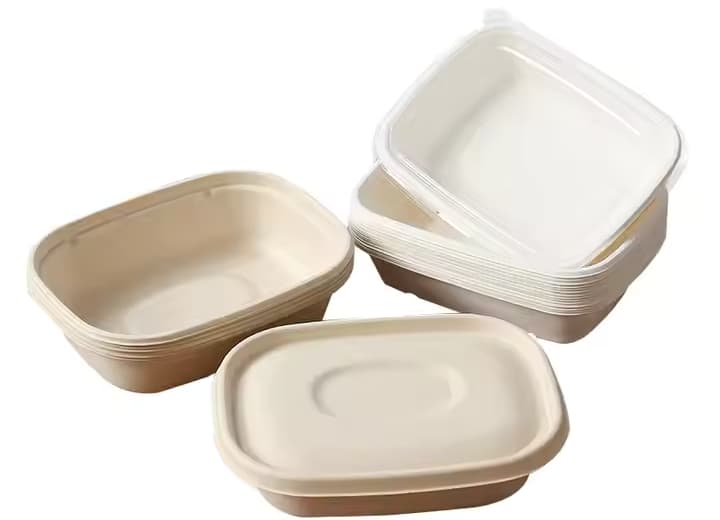
2. The 4 Scientific Pillars of Compostability Testing
When Dashan Packing or any legitimate manufacturer applies for a compostable packaging certification (like BPI or EN 13432), the product must pass four grueling laboratory tests. Understanding these helps buyers realize why uncertified products are so risky:
Disintegration (Physical Breakdown): The packaging is placed in a controlled composting environment. Within 84 to 90 days, no more than 10% of the original product’s dry weight can remain in pieces larger than 2 millimeters. If it doesn’t break down physically, it fails.
Biodegradation (Chemical Breakdown): Microbes must consume the material and convert it into carbon dioxide. The standard requires at least 90% of the organic carbon to be converted into CO2 within 180 days.
Heavy Metals Analysis: The material is chemically analyzed to ensure it does not contain dangerous levels of heavy metals like lead, mercury, cadmium, or arsenic.
Ecotoxicity (Plant Toxicity Test): This is the ultimate proof. The compost created from the packaging is used to grow plants (usually barley or cress). The plants must grow at a rate of at least 90% compared to plants grown in standard, control compost. If the packaging leaves behind toxic residue that kills the plants, it fails the certification.
3. Industrial vs. Home Compostable: The Critical Difference
Not all compostable packaging can be tossed into a backyard garden. Understanding this difference is vital for accurate product labeling. If you mislabel an industrial compostable product as “home compostable,” you could face consumer lawsuits for false advertising.
Industrial Compostable (Commercial)
These materials require the high heat (55°C–60°C or 130°F-140°F), constant aeration, and specific microbial balances found only in large-scale commercial composting facilities.
Common Materials: PLA (Polylactic Acid) bioplastic cups, CPLA cutlery, and certain thick molded fiber containers.
The Reality: If a PLA cup ends up in a landfill or the ocean, it acts almost exactly like traditional plastic and will not break down for decades.
Home Compostable
These materials can break down in lower, ambient temperatures (around 20°C-30°C) typical of a consumer’s backyard compost bin, usually within 12 months.
Common Materials: Uncoated, pure Sugarcane Bagasse (molded pulp), palm leaf, and certain PHA bioplastics.
Unsure which material fits your business model and local waste infrastructure? Compare their real-world performance in our guide: [Cornstarch vs. Sugarcane Bagasse: Best Biodegradable Takeout Box?].
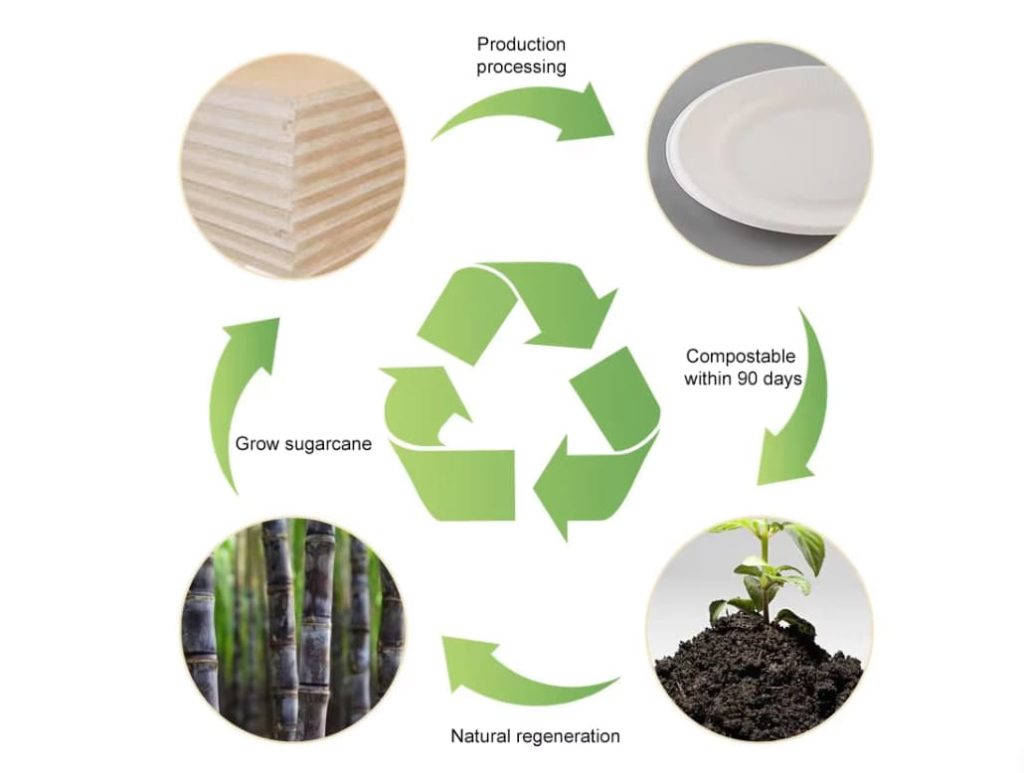
4. Comparison Table: Top Global Certifications to Look For
If your factory cannot provide one of the following certificates, do not import their products into highly regulated markets (like the EU, California, or Australia).
| Certification Logo / Name | Issuing Region | Testing Standard | Key Highlights & Material Focus |
| BPI (Biodegradable Products Institute) | North America | ASTM D6400 (Plastics)
ASTM D6868 (Coated Paper) | The gold standard for the US market. Strictly bans all PFAS. Ideal for PLA cold cups and Bagasse. |
| TÜV Austria (OK compost INDUSTRIAL) | Europe / Global | EN 13432 | Mandatory for the EU market. Guarantees breakdown in commercial facilities within 12 weeks. |
| TÜV Austria (OK compost HOME) | Europe / Global | NF T51-800 | Premium certification for items that degrade in backyard bins without industrial heat. |
| ABA (Australasian Bioplastics Assoc.) | Australia / NZ | AS 4736 (Industrial)
AS 5810 (Home) | Required to bypass strict Australian single-use plastic bans. Features the “Seedling Logo”. |
| DIN CERTCO | Germany / Global | EN 13432 / ASTM D6400 | Highly respected European certification body, often working in tandem with TÜV. |
Need transparent pricing on fully certified packaging? [Get a Detailed Quote on our Bagasse Solutions].
5. Regional Legislation: Why Certification is No Longer Optional
In the past, eco-labels were just a nice marketing bonus. Today, they are legal requirements.
United States (California SB 343 & Washington HB 1033): California’s strict “truth in labeling” laws prohibit the use of the “chasing arrows” recycling symbol or the word “compostable” unless the product meets strict ASTM standards and is accepted by local composting facilities. Violations result in massive fines per incident.
European Union (PPWR & SUPD): The EU is aggressively cracking down on fake green claims. The upcoming Packaging and Packaging Waste Regulation will mandate that certain categories of packaging must be compostable in industrially controlled conditions.
Corporate Mandates: It’s not just governments. Major retailers like Whole Foods, Starbucks, and Aldi now require full BPI or TÜV documentation from their packaging suppliers before issuing purchase orders.
6. Buyer Warnings: How to Verify Your Supplier’s Certificate
 Warning: Do not accept a screenshot or a PDF of a certificate at face value. Photoshop makes it incredibly easy for unscrupulous trading companies to forge BPI or TÜV certificates.
If you want to protect your brand from supply chain disasters, you must act as an auditor. Here is the foolproof way to verify compostable packaging certification:
Ask for the Exact Details: Request the Certificate Number, the exact Company Name registered, and the specific Product Category.
Go to the Official Database: Certifying bodies maintain public, searchable databases. Go directly to the BPI Certified Products Catalog or TÜV Austria’s Certificate Directory.
Cross-Reference the Data: Search the certificate number. The factory name must match the supplier you are paying. The product description (e.g., “Molded Fiber Clamshell”) must match what you are buying. Check the expiration date.
Beware of “Material Only” Claims: A common trick is a supplier saying, “The raw PLA resin is certified.” That is not enough. The finished product (the cup, the bowl) must be certified, as the manufacturing process and added inks/adhesives can alter compostability.
For more insider tips on vetting Chinese manufacturing partners and spotting red flags, see our comprehensive checklist: [Top 10 Mistakes When Buying Food Packaging from China].
7. Conclusion: Compliance is Your True Competitive Advantage
In today’s highly scrutinized market, importing “eco-friendly” packaging without proper third-party certification is a massive financial and reputational risk. True compostable packaging certification protects you from customs seizures, EPR taxes, and devastating consumer backlash.
At Dashan Packing, we believe in absolute transparency and uncompromising quality. Our dedicated molded fiber workshops produce premium, PFAS-free sugarcane bagasse containers backed by verifiable, internationally recognized compostability test reports. We don’t just sell boxes and cups; we sell supply chain security and peace of mind.
Don’t risk your brand’s reputation with unverified suppliers. [View Dashan’s factory certifications] or [Contact Dashan’s Export Team for Free Samples] today to start building a truly sustainable product line.
FAQ: Compostable Packaging Rules & Standards
1. Is biodegradable packaging the same as compostable packaging?
No. “Biodegradable” simply means a product will break down eventually, often taking hundreds of years and leaving behind microplastics. “Compostable” is a strict scientific standard (like ASTM D6400 or EN 13432) requiring the product to break down into non-toxic, natural elements within a specific timeframe (usually 90-180 days).
2. Can I put industrial compostable packaging (like PLA cups) in my backyard bin?
No. Industrial compostable packaging requires sustained high temperatures (over 55°C) and specific microbial conditions to break down. In a home backyard bin, a PLA cup might take years to decompose.
3. Does BPI certified compostable packaging contain PFAS?
No. Major certifiers like BPI have strictly banned intentionally added PFAS (forever chemicals) from their certified products. To pass the certification, total fluorine levels must generally be tested and fall below 100 parts per million.
4. Will I face legal trouble if I use fake eco-labels?
Yes. Regions like the European Union, California, and Washington State have enacted strict “truth in labeling” laws. Using generic terms like “earth-friendly” or “biodegradable” without third-party compostable certification can result in massive fines and mandatory product recalls.
5. How much more does certified compostable packaging cost compared to standard plastic?
Certified packaging carries a slight premium due to the cost of sustainable raw materials (like PLA resin or premium sugarcane bagasse) and the expensive lab testing required for certification. However, this marginal cost is easily offset by the premium pricing you can charge consumers and the avoidance of strict plastic packaging taxes.
References & Authoritative Industry Standards
To ensure our clients receive the most accurate compliance and procurement advice, Dashan Packing bases its manufacturing standards and market insights on the latest data from the following global authorities:
Biodegradable Products Institute (BPI): Guidelines for Compostability and PFAS Restrictions (The official North American certifying body for ASTM D6400 and D6868 standards, detailing the strict ban on intentionally added fluorinated chemicals).
European Bioplastics / TÜV Austria: The EN 13432 Standard (The definitive European standard for determining the industrial compostability of packaging, required for the OK compost INDUSTRIAL label).
ASTM International: ASTM D6400 – Standard Specification for Labeling of Plastics Designed to be Aerobically Composted (The core scientific testing parameters for disintegration, biodegradation, and ecotoxicity).
California Legislative Information: Senate Bill No. 343 (SB 343) – Truth in Environmental Advertising (The official legislative text regarding environmental marketing claims, “greenwashing” penalties, and the restricted use of the chasing arrows symbol in the US market).
(Note: Environmental legislation and certification testing parameters are subject to regular updates. The information provided in this guide is for strategic sourcing, due diligence, and educational purposes. We strongly advise importers to verify current local regulations and consult with their destination country’s customs or environmental authorities before initiating mass production.)
Copyright & Legal Disclaimer
© 2026 Dashan Packing. All rights reserved.
This Compostable Packaging Certification Guide is an original work created by the Dashan Packing compliance and export teams. All regulatory interpretations and material recommendations are the result of our independent research and extensive manufacturing experience. Reproduction, redistribution, or unauthorized use of any part of this content without explicit written permission from Dashan Packing is strictly prohibited. Dashan Packing is committed to providing accurate, verifiable information to assist global buyers in building transparent and compliant supply chains.


评论
发表评论